18 March 2013

In Memoriam: M.M. Alam (1935-2013)


Air Commodore (Retd.) Muhammad Mahmood Alam, popularly known as "M.M. Alam", Pakistan's first fighter ace, who shot down nine Indian Air Force (IAF) jets in the 1965 India-Pakistan War, including five in a single sortie, passed away in Karachi on 18 March 2013, aged 78.

Born into a Bengali family on 6 July 1935 in Calcutta, British India, Alam completed his secondary education from Government High School in Dhaka in 1951 and joined the Pakistan Air Force (PAF) College (later Academy), Risalpur in 1952, enrolling in the 16th General Duties Pilot (GDP) Batch from which he graduated a year later. He was commissioned into the PAF on 2 October 1953.

At the outbreak of the 1965 India-Pakistan War, Alam was serving as Squadron Leader with the PAF's elite No. 11 Squadron, flying F-86F Sabres out of Sargodha Air Base.

During the War, Alam downed a total of nine Indian fighters in air-to-air combat with two additional unconfirmed probables. Alam's tally of confirmed kills comprised nine IAF Hawker Hunters. On 7 September 1965, Alam downed five IAF Hunters in less than a minute, the first four within 30 seconds, thereby establishing a world record.

John Fricker, the noted British aviation writer, wrote of M.M. Alam in his article "Thirty Seconds over Sargodha" (Air Enthusiast, Vol. 1, No. 1, 1971):
"...Mohammad Mahmood Alam is a scrap of a man who appears almost lost in the none-too-roomy cockpit of a Sabre. Yet during the 1965 conflict with India, this Pakistani squadron commander, established a combat record which has few equals in the history of jet warfare...Many pilots have scored several air victories in one sortie, and have exceeded or equaled Alam’s...shooting down up to five enemy aircraft of superior performance within a few minutes. But few are likely to be able to match his record of destroying at least three opponents – Hawker Hunters of the IAF [Indian Air Force] – within the space of somewhere around 30 seconds."
Alam's confirmed kills are as follows:
Date: 6 September 1965
Aircraft Used: F-86F Sabre
Downed Aircraft: 2× IAF Hawker Hunters
Downed Pilots: Squadron Leader Ajit Kumar Rawlley, No. 7 Sqn, KIA; 1 Unknown IAF pilot
Location: Over Taran Taran, India
Other Information: Dogfight involving 3 PAF F-86s versus 4 IAF Hunters

Date: 7 September 1965
Aircraft Used: F-86F Sabre
Downed Aircraft: 5× IAF Hawker Hunters
Downed Pilots: Squadron Leader Onkar Nath Kacker, No. 27 Sqn, POW; Squadron Leader A.B. Devayya, No. 7 Sqn, KIA; Squadron Leader Suresh B. Bhagwat, No. 7 Sqn, KIA; Flight Lieutenant B. Guha, No. 7 Sqn, KIA; Flying Officer Jagdev Singh Brar, No. 7 Sqn, KIA
Location: 1 Kill east of Sargodha near the Chenab River and 4 Kills 30 miles away over Sangla Hill - midway between Lahore and Sargodha, Pakistan
Other Information: Dogfight involving 2 PAF F-86s versus 6 IAF Hunters. All 5 aircraft shot down in a single sortie, 4 within 30 seconds. 1 AIM-9 Sidewinder Kill, 4 Gun Kills

Date: 16 September 1965
Aircraft Used: F-86F Sabre
Downed Aircraft: 2× IAF Hawker Hunters
Downed Pilots: Flying Officer Farokh Dara Bunsha, No. 7 Sqn, KIA; 1 Unknown IAF pilot
Location: Near Halwara and Adampur, India
Other Information: In a single sortie. Dogfight involving 2 IAF Hunters versus 2 PAF F-86 Sabres. 1 Gun Kill, 1 AIM-9 Sidewinder Kill
Alam next to his F-86 Sabre in September 1965 (notice the 11 Indian flags
painted on the Sabre representing 9 confirmed kills and 2 probable kills)

Below is Alam's account of his kills on 7 September 1965 as quoted by Fricker:
"As we were vectored back towards Sargodha, Akhtar called, "Contact - four Hunters", and I saw the IAF aircraft diving to attack our airfield. So I jettisoned my drops [external fuel tanks] to dive through our own ack-ack [anti-aircraft cannon] after them. But in the meantime I saw two more Hunters about 1,000 ft. to my rear, so I forgot the four in front and pulled up to go after the pair behind. The Hunters broke off their attempted attack on Sargodha, and the rear pair turned into me. I was flying much faster than they were at this stage - I must have been doing about 500 knots - so I pulled up to avoid overshooting them and then reversed to close in as they flew back towards India.

"I took the last man and dived behind him, getting very low in the process. The Hunter can out-run the Sabre, it's only about 50 knots faster, but has a much better acceleration, so it can pull away very rapidly. Since I was diving, I was going still faster, and as he was out of gun range, I fired the first of my two GAR-8 Sidewinder (air- to-air missiles) at him. In this case, we were too low and I saw the missile hit the ground short of its target.

"This area east of Sargodha, however, has lots of high tension wires, some of them as high as 100-150 ft., and when I saw the two Hunters pull up to avoid one of these cables, I fired my second Sidewinder. The missile streaked ahead of me, but I didn't see it strike. The next thing I remember was that I was overshooting one of the Hunters and when I looked behind, the cockpit canopy was missing and there was no pilot in the aircraft. He had obviously pulled up and ejected and then I saw him coming down by parachute. This pilot [Sqn. Ldr. Onkar Nath Kakar, commander of an IAF Hunter squadron] was later taken prisoner.

"I had lost sight of the other five Hunters, but I pressed on thinking maybe they would slow down. There were, of course, still only two Sabre’s pitted against the remaining five IAF aircraft. I had lots of fuel so I was prepared to fly 50-60 miles to catch up with them. We had just crossed the Chenab river when my wingman called out, "Contact - Hunters 1'o’clock," and I picked them up at the same time - five Hunters in absolutely immaculate battle formation. They were flying at about 100-200 ft., at around 480 knots and when I was in gun-fire range they saw me. They all broke in one direction, climbing and turning steeply to the left, which put them in loose line astern. This, of course, was their big mistake. If you are bounced, which means a close range approach by an enemy fighter to within less than about 3,000ft, the drill is to call a break. This is a panic maneuver to the limits of the aircraft's performance, which splits the formation and both gets you out of the way of an attack and frees you to position yourself behind your opponent.

"But in the absence of one of the IAF sections initiating a break in the other direction to sandwich our attack, they all simply stayed in front of us.

"It all happened very fast. We were all turning very tightly - in excess of 5g or just about on the limits of the Sabre's very accurate A-4 radar ranging gun sight. And I think before we had completed more than about 270 degrees of the turn, at around 12 degrees per second, all four Hunters had been shot down.

"In each case, I got the pipper of my sight around the canopy of the Hunter for virtually a full deflection shot. Almost all our shooting throughout the war was at very high angles off – seldom less than about 30 degrees. Unlike some of the Korean combat films I had seen, nobody in our war was shot down flying straight and level.

"I developed a technique of firing very short bursts – around half a second or less. The first burst was almost a sighter, but with a fairly large bullet pattern from six machine guns, it almost invariably punctured the fuel tanks that they streamed kerosene.

"During the battle on 7 September, as we went round in the turn, I could just see, in the light of the rising sun, the plumes of fuel gushing from the tanks after my hits. Another half-second burst was then sufficient to set fire to the fuel, and, as the Hunter became a ball of flame, I would shift my aim forward to the next aircraft. The Sabre carries about 1,800 rounds of ammunition for its six 0.5 in. guns, which can therefore fire for about 15 seconds. In air combat, this is a lifetime. Every fourth or fifth round is an armor piercing bullet, and the rest are HEI - high-explosive incendiary. I am certain after this combat that I brought back more than half of my ammunition, although we didn’t have time to waste counting rounds.

"My fifth victim of this sortie started spewing smoke and then rolled on to his back at about 1,000 ft. I thought he was going to do a barrel roll, which at low altitude is a very dangerous maneuver for the opponent if the man in front knows what he's doing. I went almost on my back and then I realized I might not be able to stay with him so I took off bank and pushed the nose down. The next time I fired was at very close range - about 600 ft. or so – and his aircraft virtually blew up in front of me. None of the pilots ejected, and all of them were killed."
Alam's F-86 Sabre as depicted by official PAF artist,
Group Captain (Retd.) Syed Masood Akhtar Hussaini

In recognition of his feats during the 1965 War, Alam was awarded Pakistan's second-highest gallantry medal, the Sitara-e-Jurrat (Star of Courage) (with Bar), by the President of Pakistan, which is the highest gallantry medal that can be bestowed upon a living military person by Pakistan (the highest gallantry medal being the Nishan-e-Haider (Sign of the Lion), which is only awarded posthumously).

In 1967, Alam was one of the select group of six PAF pilots sent to Mont-de-Marsan, France for nine-months long conversion training on the PAF's newly-acquired batch of 24 advanced Dassault Mirage III fighters. Alam was subsequently given command of the PAF's first Mirage squadron, No. 5 Squadron, based at Sargodha.

Being a man of impeccable integrity, Alam was critical of the manner in which Air Chief Marshal Anwar Shamim was running the PAF in the early 1980s, amidst allegations of corruption and abuse of power, which was causing anger and resentment in PAF ranks. Being outspoken, Alam thought it fit to let the Air Chief know of his feelings, which, needless to say, was not taken well by the Air Chief. Alam then lodged a complaint with President Gen. Zia-ul-Haq, informing the President that he had made a mistake by appointing Shamim as the Air Chief. Zia replied by pointing out that Shamim was loyal. To this, Alam retorted, "Loyalty to whom? The country or you?" This was too much for Gen. Zia and the Air Chief to swallow and Alam was prematurely forced into retirement in 1982, when he was holding the rank of Air Commodore. According to Air Marshal Ayaz Ahmed Khan, who was then serving as Vice Chief of the Air Staff, there was a lot of resentment in the PAF at Alam's forced retirement. As a mark of protest, Alam refused to receive pension from the PAF. Anwar Shamim's successor, Air Chief Marshal Jamal Ahmed Khan, tried his best to persuade Alam to accept his pension, but in vain. Alam finally accepted his pension (with arrears) under Air Chief Marshal Pervaiz Mehdi Qureshi in the late 1990s.

Despite the treatment meted out to him, Alam never lost faith in Pakistan or the PAF. Alam's bitterness was directed at individuals, never at institutions or the State. In an interview in 2010, Alam said, "Unfortunately we have not understood the real meaning of freedom. I have learned a lot from life. At times I do feel down, depressed and upset, but at the end of the day I know that I am a soldier and a fighter."

M.M. Alam was buried with full military honours in the graveyard at PAF Base Masroor, Karachi.

01 March 2013

Targetted Killing of Shia Hazaras in Balochistan: The Usual Suspects

As an ethnic group, the approximately 500,000 Hazaras in Balochistan Province, apart from being Shia, are also extremely patriotic Pakistanis. In the last five years, approximately 1,200 Hazaras have lost their lives to terrorism in Balochistan. Irrespective of the motive of those behind their killing, it is the duty of the Pakistani State and Balochistan Province to protect the Hazaras and bring the perpetrators of these crimes to swift and exemplary justice.

However, you cannot bring the perpetrators to justice if you don't know who the perpetrators are.

Below is a list of the five suspects most likely involved in the killing of Shia Hazaras in Pakistan's Balochistan province:

1. Lashkar-e-Jhangvi (LeJ)

Applying Occam's Razor, the anti-Shia sectarian terrorist outfit, the LeJ, would be the first on the list. However, no matter how tempting it is to blame the most likely suspect, the LeJ, for killing Shia Hazaras in Balochistan, one cannot rule out that these are false flag terrorist acts intended to be blamed on the LeJ. This is not to say that the LeJ is not involved in the killing of Shias in Pakistan and ought not be condemned for doing so. However, it is too easy to blame the LeJ, a fact not lost on those other forces bent upon destablizing Balochistan and Pakistan as part of the Great Game underway in the region.

Some would argue that LeJ's culpability lies in the fact that it swiftly claims responsibility for attacks on Shia Hazaras in Balochistan (others would say rather too swiftly). Have we now reached that level of gullibity that we're going to believe the first anonymous and unverifiable claim of responsibility for a terrorist attack? Those who have the vaguest idea of how spy agencies work, know that claiming responsibility does not necessarily prove culpability. With the increasing number of false flag attacks, including false flag terrorist attacks, being carried out in the world today, it would be prudent to treat the first and early-bird claimants with skepticism and suspicion. Most claims for terrorist acts are anonymous with little or no possibility of verifying authenticity of the claim. Anyone can pick up a stolen cell phone or go to an internet cafe and anonymously claim responsibility for a terrorist act on behalf of an organization. The more sophisticated the claimant, the easier it is to mask its real identity with the help of technology and resources.

Also, LeJ's traditional sphere of activity is Pakistan's Punjab province. Its members traditionally come from central or south Punjab. Indeed, it gets its name from the town of Jhang in central Punjab. This begs the following questions:

(i) How and why did LeJ move from its homebase in heavily urbanized and populated Punjab province (where it's easier for them to intermingle and hide amongst the local populaton) to the vast, empty or sparsely populated deserts and mountains of Balochistan where non-Baloch and non-Pakhtuns stand out?

(ii) How can LeJ's mostly Punjabi members operate with impunity not only in Quetta but along the isolated national highways of Balochistan when other Punjabi settlors are being targetted in Balochistan by the BLA?

Be that as it may, is there an alliance of terror between the sectarian LeJ and the separatist BLA? Terrorism is one of those things that makes strange bedfellows. Or perhaps this alliance of terror is not so far-fetched: for BLA, the Hazaras are non-Baloch, for LeJ, they are non-Muslim. The BLA's and LeJ's objectives may be converging when it comes to the Shia Hazaras.

2. Balochistan Liberation Army (BLA)

The BLA indiscriminately targets anyone who is pro-Pakistan in Balochistan, including the Baloch (the case of Mir Muzaffar Jamali Shaheed, the Baloch schoolteacher who was murdered by the BLA in 2012 for flying Pakistan's flag and playing Pakistan's national anthem at his school in Kharan being a case in point). In threats with racist undertones, the BLA has also openly threatened all non-Baloch, including Shia Hazaras, in Balochistan to leave Balochistan or face death. This is the BLA's declared policy of ethnic cleansing in Balochistan. The only non-Baloch ethnic group which the BLA has not threatened with expulsion from Balochistan are the Pakthtuns and this is because the Pakhtuns make up half of Balochistan's population (recent estimates now put Pakhtuns in the majority in Balochistan) and the BLA simply lacks the capability, capacity and guts to expel them.

The Shia Hazaras are not only non-Baloch but also pro-Pakistan and pro-Pakistan Army. This puts them high on the BLA's target list, which sees them as a major stumbling block in their ambition of creating an independent Balochistan. BLA would have no issue with the blame being passed on to the LeJ because they don't want to annoy Western governments, to whom they're trying to sell their doomed Free Balochistan idea to.

BLA achieves three goals by targetting the Shia Hazaras:

(i) Reduction in the population of Shia Hazaras in Balochistan through (a) targetted killings and (b) forcing their exodus from Balochistan;

(ii) Alienating the Shia Hazaras from Pakistan and the Pakistan Army; and

(iii) Demonstrating that Pakistani government and institutions have failed in Balochistan.

3. US Central Intelligence Agency (CIA)

One can no longer ignore the fact that terrorist activity in Balochistan peaks each time Pakistan is close to signing strategic pacts with China or Iran, primarily involving the construction of major infrastructure and energy projects in Balochistan. This trend is so consistent that it shows a reoccuring pattern and cannot be dismissed as a mere coincidence.

The United States is openly opposed to the Iran-Pakistan gas pipeline project and secretly averse to good relations between Pakistan and Iran. The US continuously and constantly undermines Iran-Pakistan relations, overtly and covertly. The easiest way to strain Iran-Pakistan relations is to target Shias in Pakistan, which forces Shia Iran's government to take a hardline against Pakistan due to domestic public pressure.

In the last 20 years, every major milestone in the improvement of Iran-Pakistan relations has been followed by the targetted killing of Shias in Pakistan. Is it merely a coincidence that recent developments in the construction of the Iran-Pakistan gas pipeline have been accompanied with a proportionate rise in terrorist attacks against the Shia Hazaras in Balochistan?

The bulk of the 781 km section of the 1,881 km Iran-Pakistan gas pipeline in Pakistan will pass through Balochistan on its way to Nawabshah in Sindh province. What better way to stall this project than by killing two birds with one stone:

(i) Destablize Balochistan through terrorism; and

(ii) Specifically target the Shia Hazaras to additionally strain Iran-Pakistan relations.

4. India's Research & Analysis Wing (RAW)

Chuck Hagel, now US Defence Secretary, in a talk on Afghanistan at the Cameron University in Oklahoma in 2011 confirmed what many Pakistanis have been crying hoarse over the years: that India is using Afghanistan as a base for subversive activities, including terrorism, against Pakistan. Hagel stated that India has been using Afghanistan as a second front against Pakistan. According to Hagel, "India has over the years financed problems for Pakistan on that side of the border, and you can carry that into many dimensions." One of those dimensions is terrorism.

Having established its presence in the Indian Embassy in Kabul and Indian Consulates, among others, in Jalalabad and Kandahar, India's RAW is engaged in destablizing Pakistan through covert cross border operations inside Pakistan. This includes Indian support to terrorist groups in Pakistan such as the Tehreek-e-Taliban Pakistan (TTP) and the BLA.

Apart from desiring the break-up of Pakistan, which has been its objective since Pakistan's independence, India is also opposed to China gaining a foothold in Gwadar as part of China's strategic "String of Pearls" around the Indian Ocean. From India's standpoint, destabilizing Balochistan, where Gwadar Port is situated, achieves both these objectives.

5. Afghanistan's National Directorate of Security (NDS)

The Karzai-led Tajik and Uzbek dominated Northern Alliance government in Afghanistan has a historic axe to grind against Pakistan since the 1990s when Pakistan supported the Pakhtun Taliban against it.

The NDS is not acting on its own but with the help of RAW. Ninety-percent of the weapons and explosives being smuggled into Pakistan are being smuggled from Afghanistan. The overwhelming majority of foreign terrorists, including Uzbek terrorists, entering Pakistan are also doing so from Afghanistan through the porous Pak-Afghan border, which is unlikely without the knowledge of the Afghan National Army, the US Military, NDS and the CIA, all of whom closely monitor the Pak-Afghan border.

Conclusion

What is happening in Pakistan's Balochistan province is a multidimensional chess game with multiplayers, including the players mentioned above. It would be oversimplification to label the targetted killing of Shia Hazaras as merely sectarian oriented. When multiple foreign spy agencies operate in your national theatre, then all is not what it seems.

Are the Hazaras being targetted because they're Shia or because they're pro-Pakistan? Are they being punished for their faith or for their loyalty to the Pakistani State? Or both? While Lashkar-e-Jhangvi is the usual suspect, the Balochistan Liberation Army and other separatist terrorist groups (as well as their foreign sponsors) should not be ruled out.

31 January 2013

Speech delivered by the Khan of Kalat in September 1949

The historic speech below was delivered by the Khan of Kalat, Mir Ahmad Yar Khan, in Kalat to Sardars of the former Kalat State in September 1949. He explained to them that the Kalat State's delay in acceding to Pakistan had been "due to some misunderstanding." He continued:

"I was sure at that time, and I am also sure even now, that there is no such person in the whole of the Kalat State and the Baloch tribe, who cherishes any ill-will against the Pakistan Government. As my tribe is uneducated and ignorant, it could not make a decision about accession early. At that time, the Pakistan Government faced hardships and dangers on all sides and wished that there should be no hardships except of Kashmir to stand in its way. The Pakistan Government had no evil designs against you at that time or now. But the circumstances which confronted them were so much intricate that they had no other alternative but to take possession of some parts of the State [of Kalat]...After that, you were naturally disappointed and the circumstances reached such a stage that I was left with no alternative but to ask the Pakistan Government to take the administration of the Kalat State into their hands...I had impressed upon the minds of some of the elders among you that there was no other better course for the Kalat State except to accede to Pakistan, but at that time you adhered to your previous decision, and having reduced your decision to writing gave it to the Wazir-e-Azam...The result of this has been that when the incident of Abdul Karim cropped up, I was compelled to ask the Pakistan Government to take the administration of the Kalat State in their own hands...

"My brother had taken quite an unwise step. He turned against the Pakistan Government and fled to Afghanistan where some person joined him and intended to do something. Acting statesmanly, I sent my uncle and teacher to him to tell him that in case he did not return, he should consider himself to be no more from me. I am glad he acted on my advice and returned here. But as he did not obey my instructions (instructions of an elder), he was sent to jail...

"In the meantime, the Quaid-e-Azam died. It was our duty to serve him when he was alive. After his death, it is our duty to serve Pakistan...Now that we have joined ourselves with Pakistan, we should work for it. If we did not do so, its bad effect will not only be confined to us alone, but will also affect Pakistan...At present I cannot use both the Houses as Parliament because...we have acceded to Pakistan...If I did not use you as Parliament, do not be disappointed...The question now before us is the maintenance of Pakistan. If Pakistan exists, we can lead an honourable life...Hence, we should always be prepared to serve Pakistan. Our economic condition is not sound. We are not united. Thus, we are a burden for Pakistan.

"If we act upon the Qur’an, we shall certainly achieve our object. I repeat it on behalf of the Pakistan Government. If an Islamic Government is set up in Pakistan, it will be the strongest Government. If the Islamic Government is disregarded, there will be democracy or communism. I oppose communism...because it has no religion. Democracy requires education and training. The example of the Punjab Government which lacked education and training is before you...Kalat is even more in a backward position. Democracy requires education so that we may take charge of the Government. Keep all things before you and consult each other.

"As regards myself, it is my duty to serve you...It is not a trifling matter to raise a backward tribe like yours. I am grateful to you for assisting me. Be united now. Consult each other and do such acts as may be advantageous to you and to Pakistan as well."
Source: Balochistan Secretariat’s Records, Basta 27.1.367-S/49.1949, Balochistan Secretariat, Quetta, Balochistan, Pakistan

27 January 2013

Saffron Terror: India's Admission of Hindu Terrorism

Truth took time to surface but finally it did.

On 20 January 2013, India's Home Minister, Sushil Kumar Shinde, stated, "We have got an investigation report that be it RSS [Rashtriya Swayamsevak Sangh] or BJP [Bharatiya Janata Party], their training camps are promoting Hindu terrorism. We are keeping a strict vigil on all this." He went on to add that, "Whether it is Samjhauta blast or Mecca Masjid blast or Malegaon blast, they plant bombs and blame it on the minorities."

...or Pakistan's Inter-Services Intelligence (ISI).

A couple of days later, on 22 January 2013, India's Home Secretary, R.K. Singh, backed Shinde's remarks and confirmed that at least 10 people, who were allegedly involved in a spate of terror attacks in different parts of the country, had links with the ultra-nationalist Hindu RSS or its affiliated organisations. "During investigation of Samjhauta Express, Mecca Masjid and (Ajmer) Dargah Sharif blasts, we have found at least 10 names who have been associated with the RSS at some point or the other," Singh said.

Also on 22 January 2013, India's External Affairs Minister, Salman Khurshid, agreeing with Shinde's statement on Hindu terrorism, stated that it was based "entirely on facts." Khurshid said, "Let me just say this to you very clearly that our stated position, that is shared fully by the home minister and past home minister, is based entirely on facts as the investigative agencies have made available to the government."

Therefore, the reality of Hindu terrorism as well as the existence of Hindu terrorist training camps on India's soil has been admitted officially by three high-ranking Indian government officials - the Indian Home Minister, the Indian Home Secretary and the Indian External Affairs Minister.

This is not the first time that the Indian government has admitted the existence of Hindu terrorism. On 25 August 2010, then Indian Home Minister P. Chidambaram "cautioned the chiefs of State police forces, security and intelligence officials against...the recently uncovered phenomenon of ‘saffron terrorism’."

It has now been established that Hindu terrorist organizations were responsible for, among others, the following major terrorist incidents in India, most of which were originally blamed either on the ISI or the Lashkar-e-Taiba (LeT):
(i) 2002 Godhra train burning (59 killed) - a false flag terrorist incident to justify the 2002 Gujarat massacre
(ii) 2002 Gujarat massacre (genocide of over 2,000 Muslims)
(iii) 2006 Malegaon blasts (37 Muslims killed)
(iv) 2007 Samjhauta Express attack (68 killed, mostly Pakistanis)
(v) 2007 Ajmer Sharif Dargah blast (3 Muslims killed)
(vi) 2007 Mecca Masjid bombing (16 Muslims killed)
(vii) 2008 Malegaon and Modasa blasts (8 Muslims killed)
In the immediate aftermath of the Samjhauta Express terrorist attack on 18 February 2007 near the Indian city of Panipat in which 68 passengers were killed, mostly Pakistanis, both the Indian government and media had blamed the ISI and LeT for the attacks. Now the Indian government is admitting that, in fact, Hindu terrorists were responsible for those terrorist attacks. One wonders how many other "false flag" terrorist attacks in India, carried out by Hindu terrorists, were blamed on the ISI or LeT? Invariably, every terrorist incident in India is habitually blamed on either the ISI or the LeT in knee-jerk fashion, even before any investigation has begun. The result is that Hindu terrorists carry out terrorism on Indian soil with impunity, safe in the knowledge that the ISI or LeT would be blamed by the Indian government, the Indian media and the Indian people.

It may be pertinent to mention that no political party in Pakistan has been proven to be linked to terrorism. Yet India's second largest party, the BJP, has been proven to be linked to terrorism, as admitted by India's government. This shows that, unlike Pakistan, terrorist organizations have acquired political power in India, especially in the Indian State of Gujarat (see "The Gujarat massacre - New India's blood rite").

Let it also not be forgotten that the assassinations of Mohandas Karamchand Gandhi, Indira Gandhi and Rajiv Gandhi were carried out by either Hindus or Sikhs, and not by the ISI, Pakistanis or Muslims. So India should stop blaming Pakistan and the ISI for every terrorist incident that takes place on its soil and awaken to the reality of its homegrown Hindu terrorists.

Now that India is in a mea culpa moment and in the mood of admitting hard facts, which it has previously denied, it should also admit that it is exporting terrorism to Pakistan directly, and indirectly through Afghanistan, where the Indian Embassy in Kabul and Indian Consulates in Kandahar and Jalalabad are planning, sponsoring, financing, training and supplying weapons and explosives to terrorist organizations such as the Tehreek-e-Taliban Pakistan (TTP) and the Balochistan Liberation Army (BLA) to carry out terrorist attacks and targetted killings in Pakistan.

12 January 2013

Who is killing the Hazaras in Balochistan Province?

As an ethnic group, the approximately 500,000 Hazaras in Balochistan Province, apart from being Shia, are also extremely patriotic Pakistanis. In the last five years, approximately 1,100 Hazaras have lost their lives to terrorism in Balochistan. Are they being targetted because they're Shia or because they're pro-Pakistan? Are they being punished for their faith or for their loyalty to the Pakistani State? Or both? While Lashkar-e-Jhangvi is the usual suspect, the Balochistan Liberation Army and other separatist terrorist groups (as well as their foreign sponsors) should not be ruled out.

Irrespective of the motive of those who are doing the killing, it is the duty of the Pakistani State to protect the Hazaras and bring the perpetrators of these crimes to swift and exemplary justice.

The inept, corrupt and bloated current civilian government in Balochistan (51 members out of the 64-member Balochistan Provincial Assembly are either government ministers or advisors) has failed miserably to protect the lives and properties of Balochistan's residents, including the Hazaras. The only solution is Governor's Rule and a province-wide military operation against all terrorist organizations, including Lashkar-e-Jhangvi and the Balochistan Liberation Army.

Pakistan's most prominent Hazara, General Muhammad Musa, Commander-in-Chief of the Pakistan Army (1 April 1957 - 17 September 1966); Governor of West Pakistan (18 September 1966 – 20 March 1969); and Governor of Balochistan (17 December 1985 - 12 March 1991)

The photograph below, taken on 13 January 2013, shows Hazaras on a peaceful vigil in the freezing cold of Quetta, with the coffin of their dead draped in the Pakistani flag. Even in the depths of despair, this is a poignant patriotic moment, evidencing an act of supreme faith in Pakistan.

10 January 2013

Quaid-e-Azam Mohammad Ali Jinnah's Passport: Setting the Record Straight

Self-exiled MQM leader, Altaf Hussain, in a telephonic address to his party workers from London on 10 January 2013, tried to justify his British nationality and passport by claiming that Pakistan's founder, Quaid-e-Azam Mohammad Ali Jinnah, also had a British passport.

This is factually incorrect since Quaid-e-Azam had a British Indian passport, not a British passport. There's a difference: a British passport denotes British nationality whereas a British Indian passport denoted that the holder was a subject (as opposed to national) of the British Indian Empire. Quaid-e-Azam's British Indian passport was issued at Karachi in 1946 when Pakistan did not exist and Karachi was part of the British Indian Empire. Before the independence of Pakistan and India in August 1947, all citizens of British India were considered British Indian subjects and were issued British Indian passports for travel purposes.

Also, Quaid-e-Azam did not have the option of choosing his nationality in 1946, whereas post-1947, Pakistani politicians do have a choice. Quaid-e-Azam was born a British Indian subject, like all others born in British India at that time, whereas Altaf Hussain was born a Pakistani national and voluntarily applied for and acquired British nationality. On page 1B of Quaid-e-Azam's British Indian passport, under the "National Status/Nationality" section (see below), it clearly reads "British Subject by Birth" (not "British National"), as he was born in Karachi, which was then part of the British Indian Empire), whereas Altaf Hussain is a British national by choice.

Furthermore, even after Pakistan's independence, Pakistani nationals continued to use British Indian passports until Pakistan began printing its own passports, which was not until the early-1950s. Indeed, there was no such thing as a "Pakistani passport" from the time of Pakistan's independence on 14 August 1947 until Quaid-e-Azam's death on 11 September 1948. It may be pertinent to mention that Pakistan was a Dominion under the British Crown until 23 March 1956, when it adopted its first Constitution and became the "Islamic Republic of Pakistan." In fact, the Islamic scholar and Austrian Jewish convert to Islam, Muhammad Asad (formerly Leopold Weiss), who was not a British Indian citizen, became the first Pakistani passport holder in 1951 when he was issued with a travel document by the Government of Pakistan marked "Citizen of Pakistan" to enable him to tour the Middle East in his capacity as the Pakistani Foreign Ministry's Deputy Secretary in charge of the Middle East Division.

Finally, in the same manner in which he gave up wearing his Savile Row suits in favour of the achkan and sherwani after Pakistan's independence, Quaid-e-Azam never used his British Indian passport after Pakistan came into being on 14 August 1947.

Therefore, Altaf Hussain's comparison of his acquired British passport with Quaid-e-Azam's historical British Indian passport, apart from being unwarranted and inappropriate, is misplaced and misleading.

Quaid-e-Azam's last passport, issued by the Passport Office, Government of Sind, at Karachi, British India, on 28 November 1946, is reproduced below:


05 January 2013

Gwadar's Accession to Pakistan

Gwadar is a hammerhead-shaped peninsula protruding into the Arabian Sea from the westernmost coastline of Pakistan in Balochistan province. It is situated at the apex of the Arabian Sea and at the mouth of the Persian Gulf, approximately 460 km (290 mi) west of Karachi, 75 km (47 mi) east of Pakistan's border with Iran and 380 km (240 mi) km northeast of the nearest point in Oman across the Arabian Sea. It is a natural and strategic location for a warm-water, deep-sea port.

Before 1784, Gwadar was under the suzerainty of the Kalat State (also known as the "Khanate of Kalat"), a princely state that always remained under the paramountcy of various overarching empires at different periods of its history. In 1784, the Khan of Kalat, Mir Muhammad Naseer Khan I, of the Brahui Ahmadzai clan, granted suzerainty over the Gwadar peninsula and its hinterland to Sultan bin Ahmad of the Al Said dynasty of Muscat who, due to an internal power struggle with his brother, Said bin Ahmad, had escaped to Gwadar from Muscat in 1784. Upon returning to Muscat in 1792 and capturing power, Sultan bin Ahmad maintained his possession of Gwadar by appointing a wali (governor) and ordering a fort to be built there. Sultan bin Ahmad also ordered his governor to attack and annex the nearby Persian port of Chahbahar.

When Pakistan gained independence in 1947, Gwadar was still under Omani rule. With the independence of Pakistan and accession of all Baloch states to Pakistan, including the Chief Commissioner's Province of British Baluchistan on 15 August 1947 (under Section 2(2)(b) of the Indian Independence Act, 1947); the States of Kharan, Makran and Lasbela on 17 March 1948; and the Kalat State on 27 March 1948, the residents of Gwadar began raising the demand to join Pakistan.

In 1954, Pakistan engaged the United States Geological Survey (USGS) to conduct a survey of its coastline. The USGS deputed the surveyor, Worth Condrick, for the survey, who identified the hammerhead-shaped peninsula of Gwadar as a natural and suitable site for a new deep-sea port. This finding, coupled with the rising demands of the residents of Gwadar to join Pakistan, prompted Pakistan to make a formal request to the Sultan of Muscat and Oman, Said bin Taimur, for the transfer of Gwadar to Pakistan. On 7 September 1958, after four years of negotiations, including six months of intense negotiations, Pakistan purchased the Gwadar enclave from the Sultanate of Muscat and Oman for USD $3 million. Gwadar formally became part of Pakistan on 8 December 1958, after 174 years of Omani rule.

As Prime Minister Malik Feroze Khan Noon addressed the nation on Radio Pakistan on 7 September 1958 to break the news of Gwadar's accession to Pakistan, celebrations broke out in Gwadar, Balochistan and the rest of Pakistan. Below is the transcript of the Prime Minister's radio address:

"The Government of Pakistan has issued a communiqué stating that the administration of the Port of Gwadar and its hinterland, which had been in the possession of His Highness the Sultan of Muscat and Oman since 1784, was today taken over by Pakistan with full sovereign rights. The people of Gwadar have joined the people of Pakistan and the whole of Gwadar now forms part of the Islamic Republic of Pakistan. I know that the people all over Pakistan, including those residing in Gwadar, have received this announcement with feelings of great joy. I welcome the residents of Gwadar into the Republic of Pakistan and I would like to assure them that they will enjoy equal rights and privileges along with all other Pakistan nationals irrespective of considerations of religion, caste or creed. They will have their full share in the glory and prosperity of the Republic to which they now belong. The residents of Gwadar, most of whom are members of the brave Baloch community, have close racial and cultural links with the people of Pakistan and joining the Republic of Pakistan represents the natural culmination of their political aspirations. I should like to take this opportunity to thank, on behalf of the people and Government of Pakistan, Her Majesty’s Government in the United Kingdom for their assistance and help in bringing to a successful conclusion our negotiations with His Highness the Sultan of Muscat and Oman for the transfer of his rights in Gwadar. The negotiations were pursued with great vigour during the last six months and at every stage we received valuable advice from Her Majesty’s Government in the United Kingdom. I should like to congratulate and thank his Highness the Sultan of Muscat and Oman on his wise and statesmanlike decision, which has endeared him to the people of Pakistan. The success of these negotiations and the return of Gwadar to Pakistan should help to illustrate that international disputes can be resolved in a peaceful and satisfactory manner provided that the parties to a dispute are prepared to approach the problem in a spirit of fairness and justice without allowing their emotions or prejudices to get the better of their judgment. I’ve been advocating this course during the last six months and I’m happy that the present Government has been able to establish the validity and effectiveness of this policy. Gwadar is the first fruit of this policy of goodwill and cooperation. I fervently hope and pray that it will be possible for us to resolve our other international disputes in an equally peaceful and reasonable manner. Pakistan Zindabad."
At the time, Gwadar was a small and underdeveloped fishing village with a population of a few thousand. Soon after its accession to Pakistan in 1958, the Government of Pakistan made Gwadar into a Tehsil (Sub-District) of Makran District in the erstwhile West Pakistan Province (after its accession to Pakistan in 1948, Makran had been made one of the districts of West Pakistan Province in October 1955). On 1 July 1970, when West Pakistan Province was dissolved into four separate provinces, Makran was declared one of the eight districts of the newly created Balochistan Province. On 1 July 1977, Makran was declared a Division and Gwadar was declared one of its three districts.

16 December 2012

Tattoo of a Terrorist

(VIEWER DISCRETION ADVISED)

At the bottom is a photograph (taken and released by Reuters) of the body of one of the terrorists involved in the failed terrorist attack on Peshawar Airbase in Pakistan on 15 December 2012, credit for which was immediately claimed by the Tehreek-e-Taliban Pakistan (TTP) (notably before the photo was released). He was killed by Pakistani security forces in a firefight after being encircled during a search operation on 16 December 2012 in the vicinity of the Peshawar Airbase.

Religious Muslims (which the TTP claims to be) consider tattoos and the artistic depiction of the human and animal form to be un-Islamic. Yet this terrorist not only has tattoos, but tattoos depicting a satanic skull with multiple horns and a hand with long fingernails. The skull, let alone a satanic one, is a very un-Islamic art form and not one in vogue in predominantly Muslim countries like Pakistan. It goes without saying that tattoos are rare in Pakistan even among liberal Westernized Pakistanis, let alone religious ones. This begs the question: does this back, covered with satanic symbols, belong to an ideologically-driven religious Muslim fighting a Jihad?


A few years ago, a similar photograph was released by Pakistani authorities (now widely available on the Internet and too explicit to be reproduced on this blog) showing the naked body of a dead terrorist who was killed while fighting the Pakistan Army in Swat Valley. He had long hair and a long beard that made him look like a religious Muslim (or someone belonging Pakistan's tribal areas) but was, strangely, uncircumcised (circumcision is a mandatory religious obligation for all Muslim males before they reach puberty). A DNA test carried on his body by Pakistani intelligence revealed that he was a Gurkha, who are Hindus from the mid-western, eastern Nepal and the Gorkhaland region of India. Both the Indian and British armies enlist Gurkhas in elite fighting units in their respective armies.

Viewers may draw their own conclusions as to who these terrorists actually are; what their real objectives are; who their handlers are; and which ultimate beneficiaries/controllers are directing these terrorist attacks on Pakistan's high value defence assets through them. For those unaware, Peshawar Airbase houses two fighter squadrons of the Pakistan Air Force (PAF), including the first operationalized squadron of the PAF's JF-17 Thunder multi-role fighters, which, apparently, were the targets of the terrorists (see also this article).


Photo credit: Khuram Parvez/Reuters

08 December 2012

Most Favoured Nation Status to India catastrophic for Pakistani Agriculture

Dr. Mohammad Tariq Bucha

The government has planned to grant the Most Favoured Nation (MFN) status to India by the end of 2012. The farmers believe that such a basic shift in trade policy would require a significant amount of research and confidence of important stakeholders before working out specific modalities of liberalising trade relations with India.

Moreover, any such opening should occur in a phased and strategic manner to ensure that Pakistan’s agricultural and food security is not compromised. However, it is strange that the government is pursuing a reckless path to hasty trade liberalisation with India without consulting the farmers’ community.

Islamabad is currently maintaining a ‘negative list’ of over 1,000 items prohibited for import into Pakistan, but there is not a single agricultural item on this list. If approved by the federal cabinet by December 31, 2012, the ‘negative list’ will be replaced with a time-bound ‘sensitive list’ of about 100 goods with all other goods carrying 5 percent maximum tariff. The ‘sensitive list’ is likely to include only those items already on the ‘negative list’. Since there are no agricultural items on this list, this economically reckless oversight must be redressed.

The Pakistani farmers - small, medium and large - are of the opinion that a sudden liberalisation of trade with India, which ignores their legitimate interests and excludes agricultural goods from both the ‘negative’ and ‘sensitive’ lists, will prove to be suicidal for agriculture and ultimately the nation’s economy. It is in the interest of the government to give attention and support in the following context:

Pakistan must pursue a fair trade policy, rather than a hastily negotiated one-sided free trade regime with India. Agriculture should be forthwith removed from the ambit of this ill-planned trade regime.

India provides roughly $66 billion per annual subsidies to its agricultural sector. Pakistan’s entire GDP is roughly about $210 billion, and giving heavy subsidies to any sector will not be possible in the foreseeable future. Thus, agricultural goods must benefit from the protection of ‘negative’ and sensitive’ lists as well as technical regulations.

In India, a bag of urea sells for Rs 610; whereas in Pakistan, it is Rs 1,800 per bag. High Speed Diesel, a critical agriculture input, in India is priced at Rs 85 per litre against Rs 115 per litre in Pakistan. India also provides significant subsidies on indirect inputs such as electricity and seeds, both of which are almost free in India; whereas its rates in Pakistan have become extremely unaffordable. Pakistan also levies GST at 16 percent on all agriculture inputs, which are tax exempt in India. India’s average duty rate for agricultural goods is as high as 34 percent; whereas Pakistan’s average duty rate is half, i.e. as low as17 percent. Thus, India not only provides very large subsidies to help its farmers, but also erects high tariff barriers so that they are protected from competition, including agricultural exports from Pakistan. India maintains a minimum price support programme on 25 agricultural crops; whereas Pakistan has just one such agricultural crop, i.e wheat. Thus, the protection given by New Delhi to its agri-sector is significantly greater than Pakistan.

Even though India granted the MFN status to Pakistan in 1996, the balance of trade has heavily favoured it because it also imposed non-tariff and tariff barriers to deny access to Pakistani goods. Thus, Pakistan’s exports to India could not increase beyond $332 million since 1996-97; while on the other hand, even without being granted the MFN status, Indian exports to Pakistan have increased manifold, i.e. from $158 million to $2.0 billion during the same period. The ratio that was 80:20 in India’s favour now stands increased to 85:15. What more has been planned for Pakistan, is quite clear. Therefore, any knee-jerk and reckless opening of trade that does not protect our agriculture will favour India, even more to the detriment of the Pakistani economy.

In its negotiations with its Indian counterpart, the Pakistani team must insist that India lowers its tariffs on agricultural goods from Pakistan, which it can do bilaterally with respect to Pakistan, as per WTO rules.

Additionally, India has a myriad number of non-tariff barriers, which it imposes on goods that try and get access to the Indian market, particularly for agricultural goods. Before Pakistan grants the MFN status to India, it must demand that it remove most of its non-tariff barriers, which serve protectionist purposes.

High Indian subsidies and protectionist tariffs for agricultural goods would prevent Pakistani agricultural goods to be exported to India. We must include necessary agricultural goods in the current ‘negative’ and the planned ‘sensitive’ lists. If the agriculture sector is discriminated against by our own government in such a manner and not given the same protection given to industrial goods, it will force farmers to convert land to non-agricultural use leading to the closure of factories and shrinking markets. It will cause a total collapse of Pakistan’s economy with grave threat to its food security, thereby our sovereignty.

Liberalising trade with India through the Wagah route will inundate our smaller and more fragile markets. Farmers firmly believe that Pakistan and India should both benefit from a resumption of bilateral trade relations, but they support phased and measured trade liberalisation. But the cardinal principle that ‘mutually-beneficial bilateral trade must be fair in order to be truly free trade’ should not be ignored, which is enshrined in the WTO principles as well.

Any such change in policy must be transparent and be made in consultation with Pakistani farmers through different farming organisations, which are the major and important stakeholders of the agricultural sector in the country. Without a trade policy that affords protection to agriculture, granting the MFN status to India will be catastrophic for the tens of millions of people whose livelihood is based on agriculture. As is shown in the chart, India provides minimum support prices to 25 agricultural produce by an annual subsidy of $66 billion also.

The leaders in Islamabad need to wake up and not give away Pakistan’s food security and sovereignty just to please few vested interests. They must also take swift action to avert a situation that will lead to the devastation of our agriculture and economy.


The writer is the President of Farmers Associates Pakistan (FAP). E-mail: buchatariq@gmail.com

This article was published in 'The Nation' newspaper on 7 December 2012

17 November 2012

Remembering Bhagat Singh, Forgetting Aurangzeb

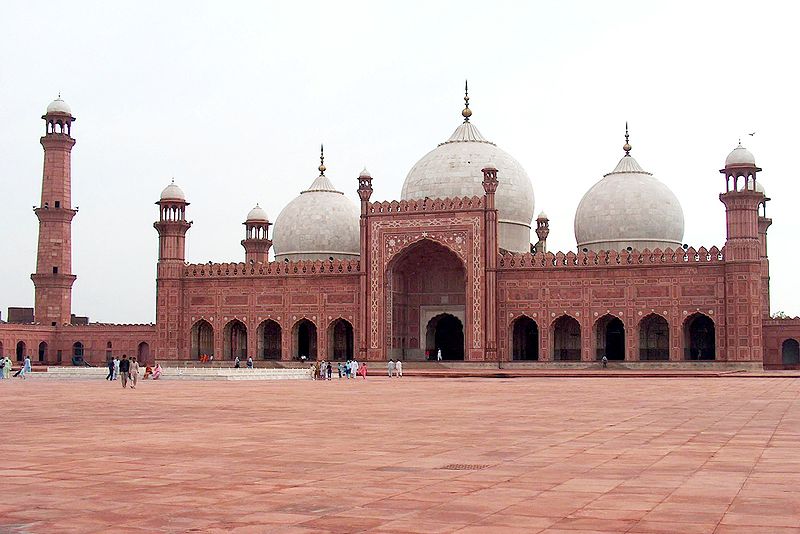
It is regrettable, if not shameful, that not a single road in Lahore is named after the sixth Mughal Emperor, Abul Muzaffar Muhi-ud-Din Muhammad Aurangzeb (1618-1707), the man who gave Lahore (and possibly the land that is now Pakistan) its greatest, grandest and most beautiful architectural treasure, the Badshahi Mosque.

A historical opportunity to correct this omission was presented to the City District Government Lahore recently when it formed the “Dilkash Lahore Committee” to rename major roads, bridges and intersections in Lahore. However, it is regrettable that, on the recommendation of the Committee, 26 roads, bridges and intersections in Lahore have recently been renamed after important personalities of Pakistan and British India, yet not a single one of them has been renamed after Aurangzeb.

This seemingly blatant omission can only point towards the historical myopia of the members of the Committee that was constituted for this purpose. One can only hope that such omission was not deliberate but rather due to an oversight, reckless as it may be.

Those who were entrusted with the task of renaming of Lahore’s roads, bridges and intersections had a moral, historical and legal obligation to (i) take into account all considerations that ought to have been taken into account; (ii) exercise their discretion reasonably and; (ii) represent the aspirations of the majority of the residents of Lahore and not their own personal desires, biases, agendas and vested interests, if any.

Furthermore, giving the authority to decide the names of Lahore’s major roads, bridges and intersections to a select committee comprising only a handful of Lahore’s residents (without any public survey, poll or referendum) is tantamount to empowering a tiny fraction of Lahore’s residents (who may represent a particular viewpoint) with the right to decide for the vast majority of the city’s residents, who may hold a different viewpoint. Such exercise of discretion is arbitrary, unreasonable, discriminatory, unfair and non-judicious. There should be written and legally-binding guidelines for naming and renaming of public roads in Pakistan. If there aren’t any, there ought to be. If there are, then it should be examined if these are being complied with.

It may be pertinent to mention that the most expensive and prestigious road in New Delhi, the capital of India, is called “Aurangzeb Road,” i.e. after the Mughal Emperor. Indeed, one British newspaper called it “India’s richest road.” The Times of India referred to it as the road “paved with gold.” Such is its prominence. This is notwithstanding the fact that Emperor Aurangzeb is not very popular amongst a large section of the majority Hindu population of India (mostly due to demonization, historical misinterpretation and myths built up by communal, bigoted and revisionist Hindutva historians). Yet it goes to the credit of New Delhi's municipal authorities that they had the courage to accept and recognize historical realities and felt the need to honour and remember Emperor Aurangzeb by naming (and keeping) one of the major roads in their capital in his memory.

If New Delhi, in the Hindu-majority secular Republic of India, can honour Aurangzeb, so can Lahore, in the Muslim-majority Islamic Republic of Pakistan. If the City District Government Lahore can bend backwards to rename a chowk as Bhagat Singh Chowk (many residents of the Shadman locality have protested against renaming of Shadman Chowk as Bhagat Singh Chowk and some have even challenged the same in the Lahore High Court), then it can certainly find a major road in Lahore to rename after Aurangzeb.